If you believe everything you read online, video editing is dead. Claude can edit videos, AI is taking over the timeline, and editors might as well start looking for another career.
I’m not so sure about that.
AI is an excellent tool. Probably one of the most useful we’ve seen in recent years. But there’s a pretty big difference between being able to do something and understanding why you’re doing it.
Not Every Video Is a Podcast.
Podcasts, interviews, talking-head videos, and much of the content created for social media are perfect candidates for automation.
Transcription, removing pauses, finding interesting moments, generating subtitles, and preparing shorter versions. These tasks can easily consume hours without necessarily requiring a new creative decision every time.
If AI can handle them in minutes, great. I see no reason to spend hours manually doing something a tool can accomplish faster and well enough.
But let’s try the same thing with an event video.
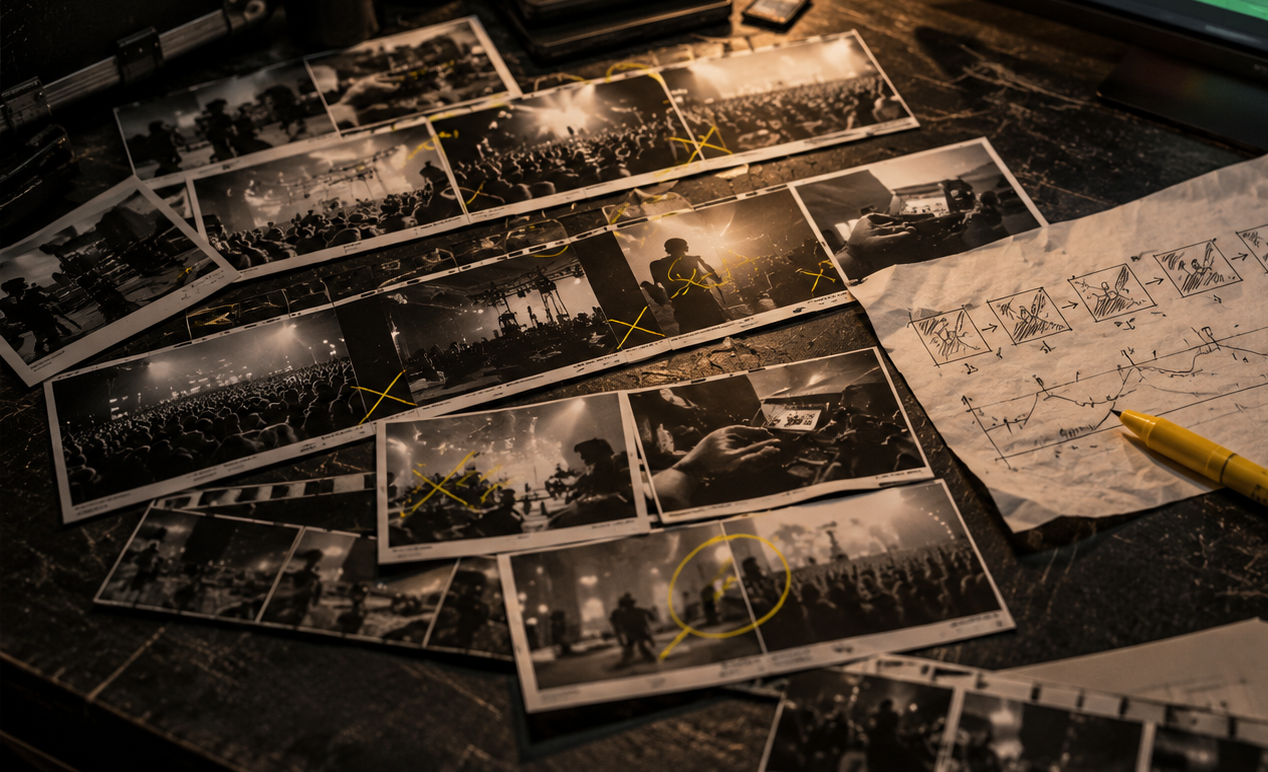
Several hours of footage. Multiple camera operators, different cameras, different picture profiles, drone shots, multiple audio sources, and hundreds of clips that look good on their own.
Now ask Claude to turn all of that into a three-minute cinematic aftermovie.
You’ll get something. Maybe even a pretty decent first cut.
But will it recognize the moment when someone’s reaction in the crowd matters more than a perfectly composed shot of the stage? Will it know when to let the ambient sound breathe, when to interrupt the music, or why a particular shot needs to stay on screen two seconds longer?
It might get some of those decisions right. But that doesn’t necessarily mean it understands the atmosphere of the event, the context of the project, or what the client actually wants to communicate.
That’s where the difference between automatically assembling clips and editing with intention becomes obvious.
AI as an Assistant, Not a Creative Director.
The new possibilities for connecting DaVinci Resolve with AI assistants such as Claude and ChatGPT Codex through MCP technology open up some interesting workflows.
Organizing footage, preparing a first cut, performing certain timeline operations, and automating repetitive tasks. That’s where I see the greatest value.
Not because I want AI to edit instead of me, but because I’d rather spend less time on repetitive technical work.
If an assistant can prepare my footage, help with selecting clips, and handle routine operations, that leaves me more time for the reason I got into editing in the first place.
Creative decisions.
Of course, pretending AI won’t change the industry would be naive. Some jobs will change, and some will probably disappear. Especially those built around repeating almost identical tasks.
But creative work isn’t just about knowing your software or how quickly you can make cuts. It’s about understanding the footage, having a sense of rhythm, experience, communicating with clients, and making decisions when there isn’t one correct answer.
That’s why I don’t believe creative careers are finished.
I believe a good editor’s value will increasingly be measured by the quality of their decisions rather than the number of operations they can perform manually.
Those who learn to use new tools while maintaining their creative approach will have a serious advantage.
AI shouldn’t be ignored. But we shouldn’t declare an entire profession obsolete every time a new demo appears on YouTube either.
I’ll use it where it saves time, experiment where it might help, and reject results that simply don’t work.
Because at the end of the day, clients don’t care how many prompts were written or how many automations were running.
They care about getting a good video.
AI can assemble a timeline. But a good timeline doesn’t necessarily make a good story.